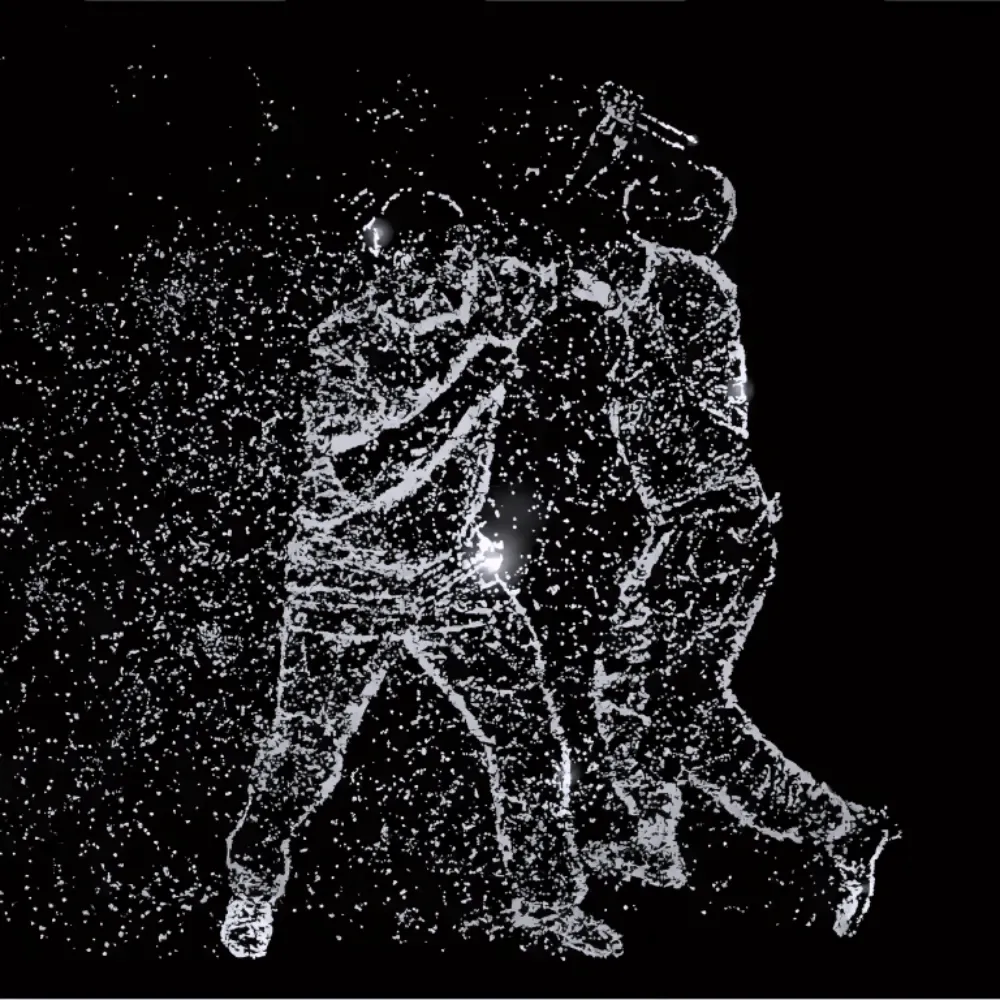
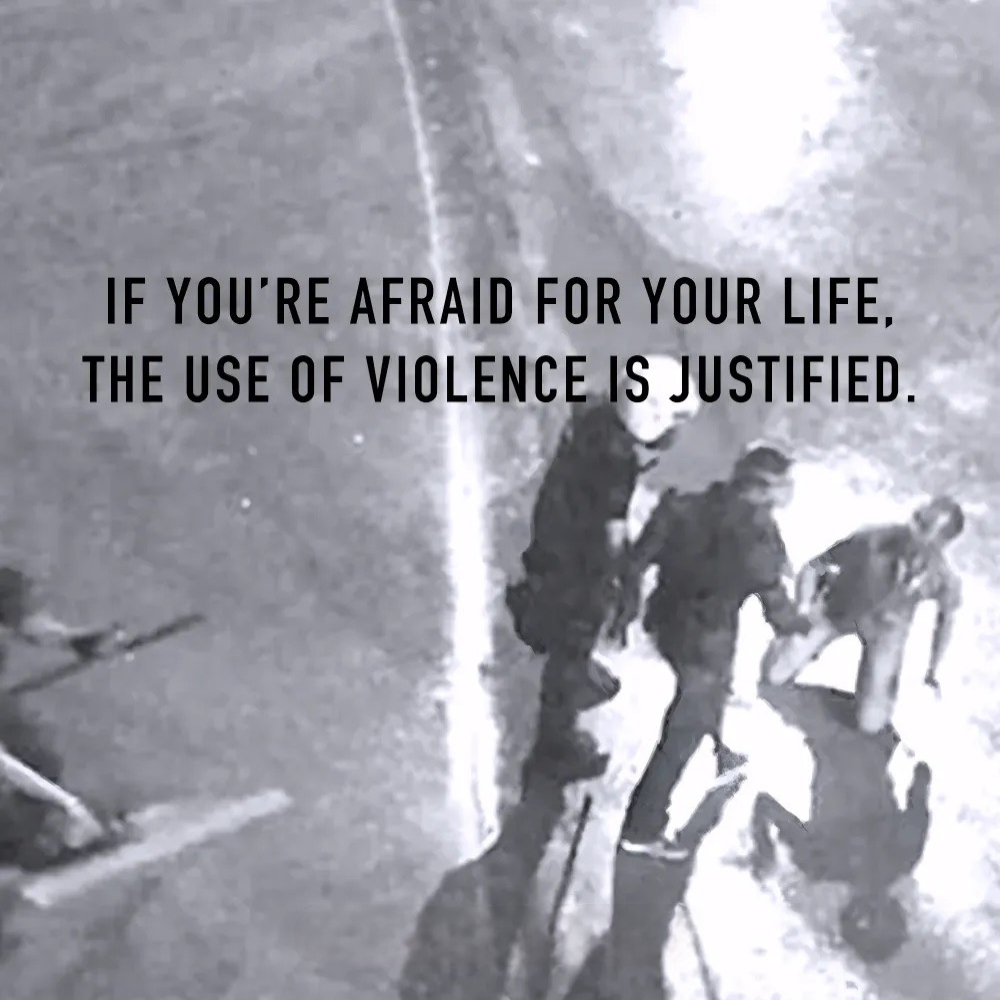
This is an old video of a brutal attack in an Australian Train Station. I want you to view this from the aspect of using the tool of violence. Listen to the police description of the attack but focus on the use of the tool and give me your thoughts by using the comments link at the bottom of this blog.
If you think going slow means easy, soft, light and painless, you're dead wrong. Slow means correct -- spot-on targeting, constantly driving your body weight through his structure to buckle it, full follow-through. When it's done right it's implacable, methodically cruel, painful, and, yes, even bruising. As it should be.
There's a huge difference between pain and injury. Pain hurts, and then it's gone -- injury is lingering and long-lasting. Pain tells you that what's happening would be truly terrible at full-speed, it reminds you what you're here for. If you know what to do with it, pain can help you focus your efforts and fan the flames of your intent. Injury simply removes you from training and teaches nothing you didn't already know.
If I hit the mats for a painless hour and walk off not feeling like I've been in a fight -- not a mark on me the next day -- I might as well of gone to a Jazzercise class instead. Really. I hit the mats to feel it, not play at it or pretend. I carry with me for the next couple of days the badges of honor that show I trained hard for violence -- bruises, scratches, the marks that training knives leave on the body. The best are the most accurate and controlled, like dime-sized contusions precisely over the heart target.
This is not limping the next day. Or a nagging ache that never leaves your shoulder. If it impacts your ability to train after a day of rest, it was too much -- that's an injury, no matter how small. Pick up enough of those and pretty soon you can't train at all.
As we're fond of saying, "Anybody can take a punch. No one can take injury."
I'm not telling you to 'beat the crap' out of each other. I'm telling you to get it right, every time -- on your turn, you take exactly what you want. Your reaction partner doesn't get to pick what happens, or how it goes down. He or she just gets to react. And you should expect no less when it's not your turn. In fact, you want to demand it. Otherwise your parnter is slacking off and playing at it. Laxity is a sure sign of not taking it seriously. Or of a potentially deadly misunderstanding of what we're up to here.
Precision is about control. Control means everything is tight, focused, and right at the edge without tumbling over. I want my partner to have total control over what I'm doing and where I'm going at all times during his turn -- so I don't get dumped on my head, thrown haphazardly onto one shoulder, or get something broken because he held it loosely and went for the target with sloppy technique.
When he gets it right it's going to hurt -- even going slow he's going to put one bony square inch of him through one soft & squishy square inch of me with immovable structure behind it, meaning my rib cage will bounce off his elbow, and not the other way around. It should feel like I ran into a steel knob at the top of a concrete-filled post. I'll save myself from true injury by reacting, but only just.
I'm going to do the same to him on my turn because anything less is screwing around, and sloppy gets you killed out there. I must practice with total precision and control so I can drive that head anywhere -- straight into the concrete or tucked under for a roll as I will. I'll tuck it one the mats, exactly, and I'll pile-drive it outside, precisely. Getting exactly what I want instead of hoping for the best. When done right in practice, it's gonna hurt. Just not permanently.
They say that pain is a great teacher, and I know this for a fact; I seek nothing but instruction every time I hit the mats. I've learned that what we do works, I've learned that pain can't stop me, and I've learned to use it to focus my intent.
The trick is to get hungry for it... in lieu of that, there's always Jazzercise.
Obviously, right? When stated in opposition like that, it's self-evident. And yet, I get enough feedback to tell me it's still fuzzy in most people's heads. Nearly everyone we train shows up looking for the former -- they want to prevent violence from happening to themselves -- while only paying lip service to the latter.
If given the choice, sane people would rather prevent violence than do it to another. This is fine as long as everyone understands the difference between the two.
The Empathy Problem
No one wants violence done to them. Once a person has heard, seen, or unfortunately experienced enough of it, they start looking for answers. How do I keep that from happening to me? What can I do in that situation? These questions would be fine if they were looking at the right side of the equation. The problem is one of empathy -- we naturally look at the guy on the ground, the one getting kicked, or stabbed, or shot. We empathize with the victim, feel his pain, and the questions become about preventing what's happening, rather than owning the situation.
No one looks at that situation and asks the real question: How do I maim, cripple and/or kill the other man? Most sane people will not reflexively see themselves as the victimizer, look at the situation and say, "That guy's obviously got it handled. I want to operate like he does."
Confusion sets in when people believe that violence is a tool to prevent violence -- in other words, that they can maintain their safety by using physical action to prevent the other man from hurting them. Blocking, countering, 'using his energy against him,' etc., are all dangerous conceits that do little more than make us feel good about violence.
They make us feel prepared while wearing the white hat (since we don't stoop to the criminal's level) -- while doing almost nothing to solve the essential problem. They don't do anything to shut off the other man, or otherwise degrade his ability to function. At best such tactics delay the inevitable; at worst they give the other man free time and opportunity to carry out his work. The work of hurting you and shutting you off.
Preventing Violence
I take a lot of heat for constantly wanting to couch the discussion of violence in social, antisocial and asocial contexts. The primary argument I hear is, "Who cares?" The second one is that I must be a simp, because that is not how badasses talk. The funny part is, if most people show up to learn how to prevent violence from happening to them, well, this is the key.
I always thought this stuff was common sense -- don't go looking for it, defuse and de-escalate when given the option, only hurt people when that's the only way out -- and then I meet people who think knocking someone out is the answer to the smart remark, social posturing and territorial disputes. Of course, it makes my hat hover. For those who don't listen, or don't care, I hope they are lucky. Luck is the only thing between them and something really horrible, or, at the very least, life-changing. And not in the good way.
The best way to prevent violence is to not be there. Second-best is to give everyone the benefit of the doubt, be calm, and go out of your way to make peace everywhere you go. While on the surface it may seem like a good idea to be intimidating, you never know when this will bite you in the ass.
The primary problem is that the people it works on -- the ones who will see you coming and clear out -- are not the ones you're worried about. The ones you're worried about, the criminal sociopath, will see your intimidation tactics as a challenge, or, indeed, a threat that must be neutralized. In other words, you'll scare away harmless people while simultaneously attracting monsters.
It's important to note that preventing violence has nothing to do with physical action -- unless that action is running away. Otherwise, preventing violence is all about navigating everything that comes before violence. There's nothing you can do once the violence has begun to prevent it. At that point your only option is to be the one doing it.
Doing Violence
This is really simple. It's taking eyes, crushing throats, breaking legs. It's being the successful person in the situation, kicking the man who's down. Instead of worrying about how to prevent violence, you're doing it. You can see how this is at odds with the idea of preventing violence -- doing violence does not prevent violence. This is not the same as attempting to thwart a knife-thrust or keep from getting kicked while down. This is you doing the things you wanted to prevent to the other man. This is focusing on the right side of the equation, the winner's side. And over here, it's pure physical action.
Now you can see where our problem, as instructors, lies -- and maybe even some problems of your own. When people see the man getting stabbed, they want to know how to stop that from happening to themselves, and they assume -- wrongly -- that there is some kind of physical action that can keep them safe from such things. So they are looking for physical training to prevent violence. And there is no such thing.
Because we are looking at different sides of the equation -- they see the man getting stabbed, I see the man doing the stabbing -- the answers don't always fit the question. When someone asks, "What do I do if the man wants to stab me?" and I show them how to take his eye, crush his throat, and break his leg, they are usually aghast at the 'severity' of the action, as well as being uncomfortable since I really didn't do anything about the knife.
When they ask, "How can I prevent him from stabbing me?" and I launch into a discussion of social/anti-social/asocial and mention running away, using your words, letting him have the parking space, etc., they are even more puzzled. What they really want is a way to not get stabbed once the stabbing starts, and there is no such thing.
You can't prevent violence once it's on, and if all you want is to change someone's behavior, violence can't do that. All it does is break down the human body, and shut off the brain. While some of you may want to argue that technically you prevent violence with violence by shutting the other guy off, please remember that that occurs only as a side effect -- the goal must be to break things inside of him and take him to nonfunctional. If the goal is to prevent him from stabbing you, you're at odds with the goal that will actually get that done.
Understanding that what people really want is an easy, painless way of preventing violence from happening, rather than to learn how to be the one doing it, cleared up a lot of misunderstanding for me as an instructor. It's much easier for me to communicate when I know this is the baseline assumption.
From the other side, it's important to make it clear that there is no physical action that makes you safe -- physical action is not the path to safety, it's the path to ruin him. If you want to prevent violence, be smart and use your social skills. But once the violence starts, the only thing that's going to change the situation in your favor is hurting him. Confuse the two at your own peril.
The chief problem with technique-based training is one of sufficiency -- that is, people are led to believe that if they 'do the move' and 'touch the target' they will get the promised result. This leads to an almost magical thinking that it's the waving of the hands and counting coup on pressure points that makes the bad man go away.
The reality is that violence is work.
Breaking the human machine is a process of applying overwhelming physics to vulnerable physiology. Can a prescribed movement break ribs, dislocate a shoulder, cause a concussion? The answer is yes -- sometimes. When it does work, it will be because the forces applied to the tissues were more than those tissues could handle without failing. When the move doesn't work it will be for the absence or insufficiency of those forces. In other words, it'll bust because you busted it; if it doesn't bust it's because you didn't put enough into it.
When you think -- and train -- in terms of techniques, you see yourself reaching out with your limbs to make contact with dots on the skin. That's fine for sport, competition and non-lethal situations. If you're dealing with a human being, trying to change his mind or behavior, this is appropriate (if not roughly non-verbal) communication.
If what you really need is to render him nonfunctional, you need to approach the task the same way you would demolishing a cinderblock wall with a sledgehammer.
Touching the wall with the hammer does nothing. Just because it's the tool for the job, and applying the hammer to the wall is the preferred manner of doing that work doesn't mean that simple contact between the two is what gets it done.
You also know that tossing the hammer at the wall won't do it. You're going to have to roll up your sleeves, take a deep breath, grip it in both fists, brace yourself and swing as hard as you can. You're going to swing it to put your entire self through the wall with each strike.
The wall is hard and relatively solid and can withstand a certain amount of abuse. If you're going to demolish it you're going to have to put more kinetic energy into it than it can take. Not just little bits at a time that you hope add up, but all at once, with every swing. A swing that falls under that threshold is wasted effort.
You already know this -- if I gave you a hammer and sent you after a wall you'd naturally employ your body to do the work. But faced with doing the same work on the human machine and most people pull back, dance, lash out to touch instead of break.
This is the legacy of viewing violence through the social lens -- as a social interaction -- and then training accordingly with techniques that satisfy the needs of that interaction. In the realm of monkey politics it is sufficient to communicate your displeasure with a fellow primate by pushing, slapping, cuffing and grappling until they submit.
In lethal violence this falls short because killers don't quit.
To render the human machine nonfunctional -- to make quitting (or not) moot -- you have to ditch technique in favor of principles. You have to start with the desired result, "I want to break his knee," and then create the situation where that's most likely to occur.
What does it take to tear out a knee? The largest amount of kinetic energy you can muster (your entire mass in motion) and a little bit of mechanical advantage (leverage) thrown through the knee in a direction it can't bend.
While these requirements can be fulfilled by any number of techniques or moves, every time it does work it works for the same base reasons. It works because of the base principles applied the same way you'd demolish that wall. Regardless of the set up or the specific movements before, during and after the injury the results wind up being the same -- a broken knee.
You have a choice in how to train for that broken knee. You can learn 50 different techniques for getting it done, some of which work all the time, some that work only sometimes, and some that really never seem to work at all, but in theory should.
It's up to you to take the time to learn all 50 and sort them out... and hope for the best when a broken knee is what you need to survive. Or you could learn why knees break, learn the simple, base principles that are at work in every broken knee -- regardless of whether it was on purpose or an accident, whether it was sitting, standing or laying down, with or without extraneous tools -- the one small set of facts that encompasses all 50 techniques. That's the question: learn 50 things that don't always work, or the one thing that does?
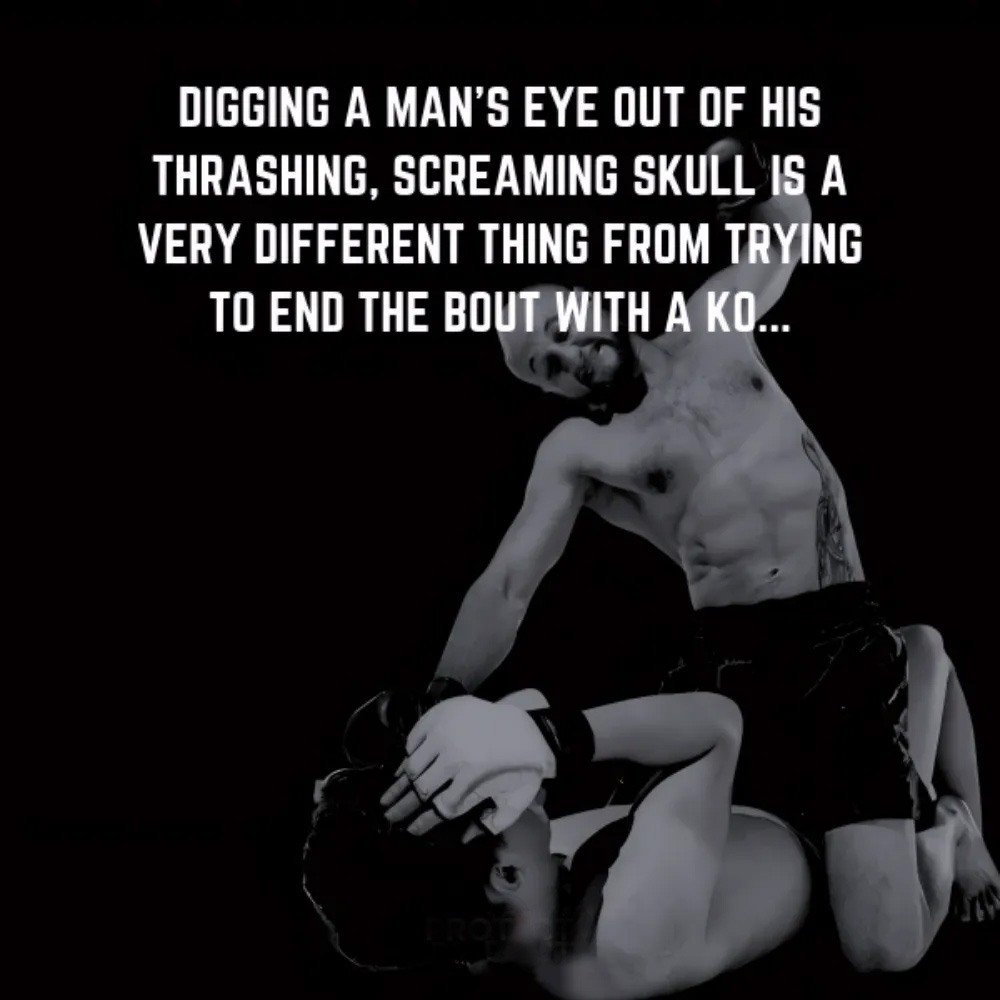
Whichever way you go, in the end it works because you did the work. The man is blind because you gouged the eye, he's crippled because you broke his knee, he's dead because you smashed his head against the planet.
We work both ends of the violence training spectrum and all points in between -- we go from the simplest application that requires no more coordination than you got up off the couch and all the way up to techniques that are a marvel of balance, timing, skill and athletic ability.
We do everything that can be done in violence -- striking, joint breaking, throwing, knife, stick, gun, multi-man, standing up or on the ground, all at once. We have a 10-year curriculum -- in writing -- that can take someone from zero to Master Instructor. And for all that, we also do 'rock to the head.'
What does this mean for you?
It means that no matter what your goal in violence training, we can get you there.
If you're just looking for immediate, street-lethal 'self-defense,' we can do that in two days or less.
If you're looking for professional-level hand-to-hand combat skills, we can challenge you, and keep you busy, for a decade.
Our seminars, videos and manuals are a distillation of more than 20 years of experience, designed not to impress but to actually teach you what you need to know to get the job done right now. We could have very easily chosen to make things needlessly difficult to make ourselves look good, to make you jump though all the hoops for 20 years just like we did.
Instead, we took our understanding of the material -- the way we do it now -- and teach it the way we would to members of our own families. Straight to the core principles with no BS. No screwing around with things that won't matter.
So what is the information in our seminars and information products distilled from?
Our 10-year curriculum, as taught at the San Diego Center, consists of more than 1,500 coordination sets in writing, each one an example of striking, joint breaking, throwing, with and against various tools (knife, stick, gun).
The use of body weight as a battering ram to smash, break, rupture, or otherwise wreck vital anatomy so it doesn't work anymore. When you combine the 58 target areas (that can be smashed with your bare hands) with the various body tools used in striking (fist and open hand, forearm, elbow, shoulder, hip, knee, shin and foot (blade-edge, ball of foot and heel)) and the various ways of employing them (straight and cross punches, hooks, uppercuts, backhands, forehand hammers; straight, side, back and crescent kicks) you end up with an enormous number of possible combinations. More than you could learn in a lifetime of study. Far, far more than you could ever conceivably need in a lifetime of violent action.
The use of body weight and leverage to break or tear out joints, deforming the limbs and denying him the use of the limb from the broken joint outward. This is crippling injury. When you combine the 10 discrete joints you can break with your bare hands (neck, spine, shoulder, elbow, wrist, fingers, hip, knee, ankle) with the six base leverages (the six degrees of motion that joints can move through, bending-twisting-rocking, both forward and back) you end up with 36 basic joint breaking techniques. (It's important to note that not every joint can be broken in every direction -- for example, we can only break the elbow in one direction, not six.) If we take into account that we can place our mass & motive force on either side of the lever -- we can push it one way or be on the other side and pull until it snaps -- we get 72 basic breaks. This can be further complicated (or, more correctly, expanded with more options) when we take into account the multitude of ways to set up, hang on to, and get it done (breaking the elbow with the legs instead of the hands and arms, for instance). Again, we end up with more possible breaks than you can learn in a lifetime.
The use of body weight against structure and balance, with the ultimate goal of smashing the brain against the ground. We're looking for traumatic brain injury and/or a broken neck. There are five basic throws (leg sweeps, base-breaks, drop, hip and shoulder throws) which can be concatenated upward into innumerable techniques when you add variables like front and back, standing or on the ground, and all of the various ways to set up, hang on to, and execute the throws. This becomes another possible lifetime of study on just this topic alone.
All of the above can be done with tools -- knife and stick. A knife becomes an extra handle for a joint break or throw; a stick becomes an added lever for both.
Our baseline assumption is that he's bigger, faster, stronger, armed, knows everything you do (and is better at it), and brought his friends. Then we use crippling injury to make none of it matter. We show you how to move to put yourself on the outside of the group -- and how to put people down as you do so.
On the Ground
Injury is injury, whether we're all standing up or laying down. We do all the things that are forbidden in MMA competitions -- eye gouging, groin crushing, finger breaking -- the things that make grappling not work so well. Instead of wrestling or going strength-to-strength, skill-to-skill we go for that ugly, crippling injury.
All At Once
If you think that's a lot, we haven't even begun to combine them -- striking into a joint break and then executing a throw; or using a joint break to drive a throw; or breaking a joint mid-air during a throw. Throwing the man and riding him down, striking him into the ground. While using a knife. Or a stick. From the ground. While he's got a gun.
You are only limited by your skill and imagination.
For all that, all of those myriad elements are unified by a single overarching goal -- injury. You don't need to know how to do all those things, combined and practiced over 20 years to stick your thumb in someone's eye. In fact, you know how to do that right now, just having read those words.
All you really need is one small injury to radically change the situation in your favor.
You can learn that from any of our information products, or, better yet, a hands-on seminar.
PS. If you're lucky enough to live in San Diego and like the idea of hitting the mats -- hard -- three times a week and being kept busy for a year -- three years -- 10 years! of learning something new at every class -- we'd love to have you join our training community. Please feel free to contact me at
Just as a quick intro, realize we get questions all the time asking what differentiates TFT's laser-beam focus on the DESIREDEND RESULT (causing an injury) vs other's focus on your RESPONSE to violence.
We've written and discussed at length about the latter often not only requiring athletic skills and conditioning but years of training to become even somewhat proficient in execution.
And while we explain why TFT is both more effective and far easier to learn, hearing a story like the following really crystallizes that difference.
Here's how Chris relayed it:
-------------------- "A young woman -- a Navy Corpsman -- dropped by class last night at the San Diego Center because someone had told her that we could teach her to fight 'like they do in prison.'
"We only had 45 minutes left, and under normal circumstances I would have asked her to come back to the next class in order to have enough time for a proper orientation... but I was so taken by her enthusiasm and focus I decided to go for it and see what we could do in 45 minutes. I turned the class over to another instructor, grabbed a willing body, and got to work.
"Understand, in the live seminar environment we can get people oriented, prepped and ready for free-form mat work (that's where you're out doing violence) by lunchtime on the first day.
"I used to think that was the minimum (after all, in the 'bad old days' it took better than a week for someone to have a handle on the material).
"I have since found I can compress those critical four hours into a full class session at the Center, about 90 minutes.
"And now I was going to give it a go in half that time.
"The good news is, as a medical professional, she knew her way around anatomy and debilitating injury. That helped shave off a good chunk of work right there.
"On top of that, as a military professional she had no problems literally throwing herself into the mix. That saved a lot of do-overs.
"All that was left, really, were tools and targets.
"So we assembled the eye target using the thumb, fingers and boot heel -- standing, kneeling, and on the ground.
"We then worked theneck over, crushing the throat, breaking the neck, again from all orientations from vertical to horizontal.
"After that, the groin -- rupturing testicles with elbows, knees and boots from all angles.
"And finally, breaking ankles from the front, side and behind.
"I then demonstrated how to string these injuries together, one after the other, leaving the exact sequence up to her: gouge an eye, put a boot through the groin, break an ankle, then stomp the throat. Or fist through the groin, forearm hammer through the back of the neck, gouge the eye.
"Doesn't really matter -- pick your target, put yourself all the way through it to wreck it, pick the next one and repeat until you're satisfied he's nonfunctional.
"We were done with this part in 30 minutes.
"For the last 15 minutes of class I left her to her own devices with a training partner. She took to it with the same fire and enthusiasm she walked in the door with.
"After class she said she found the experience 'amazing and incredible' in that she not only learned what we were up to in 30 minutes, but that she could apply that information immediately, successfully converting it into real knowledge.
"It's the difference between coordination/technique-based training and principle-based training.
"Chances are I would not have been able to coordinate her well enough in 30 minutes to have her participating fully in a martial arts class -- or for competition in the ring. Both those endeavors take time, effort and conditioning to perform at a level where you can work with anyone in the room.
"Instead of focusing on how she was standing, which foot to step with, how to hold her arms I gave her one simple task -- pick a piece of anatomy and smash it.
"And anyone -- everyone -- can do that.
"All you have to know is where it is, what part of your body to use, and then throw yourself through it.
"When she asked, 'Which leg do I step with?' I replied, 'I don't care. The one that's most comfortable. The one that lets you get it done.'
"And so she did.
"We didn't have to waste time on her personal tics and idiosyncrasies of movement -- she was able to focus, fully, on what she was doing inside of him...
"Thinking like a bullet... Instead of trying to figure out how to work a gun."
-Chris Ranck-Buhr --------------------
Now, you don't need to be a medical professional to get these results. It simply validates what we've long known - the unassailable soundness of the principles involved.
And the fastest way to experience it? In a live session like she did.
After just an hour in one of the 2-day classes we hold (where you'll see video of real street violence) you understand this isn't like any self defense you've ever experienced before. Where a non-athletic businesswoman might work 1-on-1 with a martial arts veteran and both come away with life-altering skills that just may save their lives one day.
Here's the thing. After 3 exhaustive years training on the road, in 2009 we're purposely scaling back the number of events. While we'll probably add more in the second half, opportunities will be limited.
And with statistics showing gun sales rocketing up in the current economic mess just as worldwide violence spikes to all-time levels, now is your time to GRAB A SPOT in one of these sessions.
In April we'll be in both San Diego (18-19) and Chicago (25-26, although Chicago is nearly full). Use this linkto find out more.
PS. Something else. As you might have guessed, this training transfers perfectly to DVD.
Because of the simplicity of approach, the focus on targeting and the integration of movements you've done all your life, as you watch our At-Home DVD classes you 'get it,' just as you do in class.
It won't happen quite as fast; nothing beats the impact of immediate instructor feedback. But it's still extraordinarily effective.
So if live training doesn't fit your schedule right now, take a look at the At-Home DVD series, on me if you need to.
If not for yourself, do it for those who count on you to protect them.
Because today violence strikes ever more randomly. And it won't wait until you're ready. So do it now!
Below is a question we recently received that I imagine might be on your mind as well.
"In some of your DVD footage the eyes are the target for the first injury and in other footage the eyes are, say, the third injury target.
"You emphasize the importance of going for a throw only AFTER creating an injury. Shouldn't this advice apply also to striking the eyes? Because of peripheral vision, which you do refer to in the training, the eyes are NOT easy to strike successfully in the alert subject. Blinking, closing the eyes or moving the head can all diminish or completely negate the effectiveness of an eye strike. Furthermore, if you go first for the eyes and miss, the subject will be on guard against another strike and you will have lost the element of surprise.
"In consideration of the above, would it not be good advice to approach the eye strike like the throw -- to be used only AFTER you have effected a prior injury?"
This is a great question, especially since, as you note, the body invests a lot of effort and energy in protecting the eyes. The bony protrusions of the orbits, the powerful bands of muscle that actually press the eye balls into the back of the sockets when the eyes are squeezed shut, as well as the overwhelming strength of the blink and flinch reflexes all add up to a near-impregnable fortress to keep those delicate structures intact. When all of this is working as it should the eyes themselves tend to escape injury, with most of the brunt being taken up by the soft surface tissues -- seen when most punches to the face cause the lids to swell shut and bruise, leaving the eye ball itself untouched.
There are several things we must do in order to bypass all this automated protection:
Strike from outside/beneath his peripheral vision,
Put an appropriate tool all the way through the target, and
Strike with our entire mass so we end up standing where he was standing.
All of these factors can be seen at work in basketball, the number one place to find information on eye injuries. It's also interesting to note that in basketball everyone knows it's on, is alert, and is expecting to see hands near their faces.
If we stand in front of the man and reach out with our arm to do the work, he's going to see it coming. Even if he only catches a shadow of movement, the blink/flinch reflex is powerful and automatic. If he closes his eyes and turns his head, you may not get the eye injury proper -- but you are still making him react to what you are doing -- and now he is blind (eyes squeezed shut) and off balance (more on this later).
To minimize the chances for this on an initial strike, you want to come up under a 45 degree plane off the cheekbones. (Notice that if you stare straight ahead, you can't see your feet. This is the space you want to move your hand through.)
It's also important to understand that we are not going to be able to injure the eye with the 'ninja cat scratch.'
We are not trying to make contact with just our fingertips. We have to break the plane of the body.
Fighters think in terms of the sanctity of the skin, and think to the surface of the eyes. Killers deny the sanctity of the skin and think all the way through the body.
You're not going to touch his eyes with your fingertips -- you're going to put your hand through his skull, driven home with your entire mass. You're going to get your hand wet to the second knuckles in his eye sockets. In addition, you're going to shot-put his brain for traumatic brain injury ('TBI' -- a concussion).
You need to end up standing where he was standing, driving your entire mass through his space, forcing him to stumble backwards off balance. This not only ensures that you struck with your mass but also puts you into position to break the next thing without having to run after him. And if he goes down (which is likely, since the mechanisms of balance are in the head, which you just struck and drove through) then you can start stomping him on the ground.
None of these three things happen in isolation -- it's all one strike.
If it all works perfectly then you end up giving him a full-bodied strike through the head -- a knockout blow -- where your fingers happen to get wet in his eye sockets with resultant injuries to the eyes.
If you don't get the eyes: you've still momentarily blinded him (blink/flinch reflex), given him a TBI, and taken his balance... all of which give you the time and space to break something else.
So even if it goes wrong (no actual eye injury) it's all right, as long as you know what to do next and take advantage of what you made him do.